



The Dordrechts Museum, Museum of the Mind, and Bonnefanten explored through the pilot programme Museum on Prescription how museums can contribute to improving mental health. The first research results of this unique art-viewing project are promising and confirm that this way of engaging with art can positively contribute to mental wellbeing.
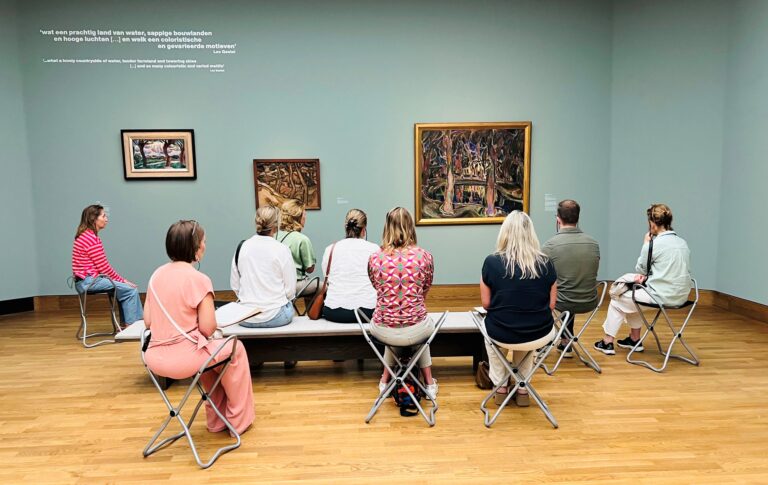
During this Museum on Prescription programme, a group of up to twelve participants looks at specially selected artworks and discusses them together under the guidance of a professional facilitator. The programme uses three different art-viewing methods.a
The first research results of the pilot were shared with colleagues from the museum field during the Museum Congress 2024.
The accompanying research was conducted by psychologist and researcher Annabelle Twigt (Erasmus University Rotterdam), whose study explored the impact of guided art-viewing programmes on participants’ mental wellbeing.
Dordrechts Museum — 2023–2024
Project lead: De Nieuwe Collectie
Jolien Posthumus — advisor
Annabelle Twigt — research report
Within the Museum on Prescription, Mindfulness in Museums is one of the three art-viewing methods. During the sessions, participants learn to observe their thoughts, emotions, and bodily responses while looking at an artwork. Instead of analysing art intellectually, the focus shifts to direct experience. This shift from thinking to sensing can create moments of calm, clarity, and insight.
Mindfulness in Museums is a research-informed approach that cultivates awareness combined with mental health education. The method helps participants recognise automatic mental patterns — such as rumination, stress reactivity, and mind-wandering — and respond to them in a more conscious and skilful way.
The first research results of the Museum on Prescription pilot (2024), conducted by Annabelle Twigt, indicate that guided art-viewing programmes can positively contribute to participants’ mental wellbeing.
The research indicates that participants experienced, among other things:
• moments of stillness and distance from everyday pressures
• new perspectives on personal experiences
• increased awareness of thoughts and emotions
• a sense of connection with others
The combination of attentive looking, reflection, and group dialogue creates a safe environment in which participants can share experiences and develop new insights.
“Normally I walk quite quickly through a museum. During this session I stayed with one artwork for much longer. As I looked, I noticed how many thoughts and feelings came up. It brought me calm — and also a new perspective on my own situation.”
— Museum op Recept participant
“It was special to look at art together and realise that everyone sees something different. That conversation gave me new insights into how I look at things in my own life.”
— Museum op Recept participant
Whether you are a museum professional, a mindfulness practitioner, or simply curious — this is your starting point.