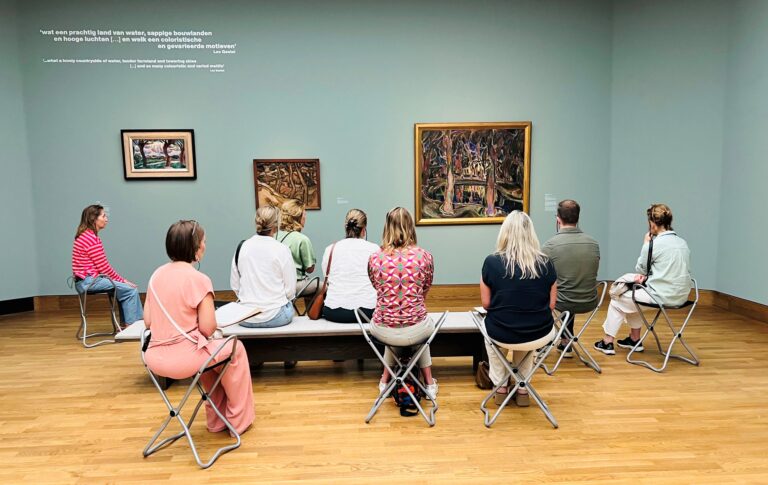







At Nationaal Monument Kamp Amersfoort, Mindfulness in Museums (MiM) explored how trauma-sensitive mindfulness practices can support reflection and awareness in memorial sites.
During these sessions, participants pause and notice how they think, feel, and respond while moving through the museum and monument. In this way, the site becomes not only a place of historical remembrance, but also a space for inner reflection and shared presence.
Mindfulness in Museums brings mindfulness from the meditation room and clinical practice into museums: spaces for presence, care, and shared humanity.
Mindfulness in Museums was invited to facilitate a trauma-sensitive mindfulness session for the museum team of Nationaal Monument Kamp Amersfoort.
Together with a small group of museum staff, participants walked through the monument and the museum while engaging in a guided mindfulness practice.
Through open awareness, participants were invited to pause, reflect, and connect with the place and its history.
Working with memorial sites requires particular sensitivity.
Trauma-sensitive mindfulness practices acknowledge that visitors may encounter strong emotional responses when engaging with histories of violence, war, and loss.
Mindfulness in Museums explores how museums can support visitors in these encounters by creating moments of pause and reflection. Through guided attention, visitors are encouraged to notice bodily sensations, emotions, and thoughts while engaging with the museum environment.
In this way, museums and memorial sites can become places where difficult histories can be approached with care and awareness.
Nationaal Monument Kamp Amersfoort is a museum and memorial site in Leusden, commemorating the former concentration camp Kamp Amersfoort, which operated during the German occupation of the Netherlands in the Second World War.
Today the site is dedicated to remembrance, reflection, and education. The monument and museum invite visitors to consider the impact of war, discrimination, and violence, while encouraging dialogue about freedom, democracy, and human dignity.
The site is often described as a place of “mémoire et miroir” — a place to remember the past while reflecting on the present and future.
Mindfulness in Museums contributes to this context by exploring how mindful attention can support reflective encounters with history.
Mindfulness in Museums sessions usually include:
• a short mindfulness check-in meditation
• guided attention to artworks, objects, or spaces
• reflection on sensory and emotional experience
• inquiry connecting the experience with everyday life
Participants learn to observe their inner experience while engaging with the museum environment. This supports emotional regulation and clearer awareness.
In addition, the sessions help people shift from analysing exhibitions intellectually to experiencing them more directly.
Mindfulness in Museums shows how museums and memorial sites can become spaces for presence, emotional regulation, and shared reflection when programmes are facilitated by trained professionals.
Participants often report:
• deeper engagement with historical narratives
• increased awareness of emotional responses
• new perspectives on remembrance and reflection
• a sense of shared presence and dialogue
Since 2020, more than 25 museums internationally have worked with Mindfulness in Museums (MiM), reaching nearly 2,000 participants.
MiM is applied and endorsed by leading partners such as the Van Gogh Museum, Museum of the Mind, and Oxford Mindfulness Foundation.
Mindfulness in Museums collaborated with Nationaal Monument Kamp Amersfoort to:
• facilitate a trauma-sensitive mindfulness session for the museum team
• explore how mindfulness practices can support reflective encounters with memorial sites
• investigate how museums can create spaces for shared reflection and emotional awareness
The MiM methodology is evidence-based, stress-, neuro- and trauma-informed.
All programmes are delivered by qualified mindfulness teachers trained at recognised institutions.
Mindfulness in Museums is a practice-led expertise emerging from the museum field itself, shaped by the sensory and emotional possibilities of art, heritage, and memory.
Nationaal Monument Kamp Amersfoort
Leusden — The Netherlands
Whether you are a museum professional, a mindfulness practitioner, or simply curious — this is your starting point.